
Being an internet refuge for Graeme McMillan
So we started to experiment with what more we could do with the direct market. We started taking part in Free Comic Book Day, and found our orders growing in massive jumps each and every year as new readers took a chance on something fresh. We hooked up with IDW, one of the canniest publishers in the business, and have seen them do fantastic things with some our properties. Let me put it this way, every time they do something great with Dredd, our own books do even better. We made sure we got our books in as many places as possible when the Dredd movie came out and it’s the US direct market that has done the best with them.
The problem isn’t the idea of aspiration itself, or of dedication and perseverance, or of inspirational quotes. The problem isn’t the belief that relentlessly pursuing one’s dreams can lead to success, though it should be approached with the recognition that it takes a lot of good fortune and the right opportunities, and the empathy to understand that those who never have those breaks should not be figures of contempt or object lessons in failure. The problem isn’t even the idea that people of unshakable will can change the world, though this should be tempered with the recognition of a moral context: the unshakable will of Gandhi to change the world had a very different endgame than the equally unshakable will of Hitler to change the world. The problem is that none of these are being presented honestly. They are, instead, being presented in the form of marketing, in the form of advertising. They are not personal messages of achievement and inspiration; they are commercials. They are meant only to sell you something, whether it’s trinkets for a particular charity, or treatment at a particular hospital, or the idea that you should give up on such quaint notions as job security and benefits in our bold new digital economy. Whatever they’re specifically selling, they are commercials, and commercials are never to be trusted, especially when the message delivered is one of contempt for the ordinary man, the average citizen, the person who could be you if you weren’t so unique and special.
Here is the more serious point: journalists are way under-rated as influencers. They are at the center of interesting discussion. And that will continue to be the case, even in a discussion environment which seems to challenge the traditional definition of the profession.
From Nick Denton’s Q&A attempt to sell people on the Kinja platform – something I’m still not convinced of the USP of, but I might just be dim. Before you get too excited about Denton apparently offering more value to journalists than they’re traditionally afforded, elsewhere in the same chat, he says this: “We intend to blur the line between journalist and reader.” And this: “To me, a writer is words on a page; and numbers on this screen. That may seem cold; but at least it’s fair.”
He also ducks the question about letting Gawker employees unionize: “Let’s save that particular question for another session.”
Hashtag “Complicated Feelings About Gawker Based on Personal Experience,” perhaps.
One of the things that I’ve been talking about, that I’m really passionate about is trying to figure out ways to introduce comic books to new readers and then redirect those readers into the direct market. Most of us figured out comic books, we got it at our 7/11 or our newsstand and eventually fell in love with the medium and we became direct market customers. And I think at IDW we’re very unique sin being able to expand the market in that way. We’ve been doing things like the Micro Fun Packs which are miniature comic books. We had really broad distribution of the Fun Packs so they were at every mass retailer—WalMart, Target, Toys R Us—and our sell-through was crazy. On the first Fun Packs our sell-through averaged about 60% at mass which is unheard of for any product. It’s an extraordinary sell-through. And that Fun Pack has marketing collateral to back, it drives people to the direct market. So if you’re a mom and you picked up these Fun Packs to put in your kids stocking for Christmas and the kid likes it, they’re not going to go back and get more fun packs, the only place really to get that content is through the direct market and our marketing collateral in there is very clear about that.
Ted Adams of IDW talks about different ways to grow the comic audience. In addition to the fun packs – which sell in the hundreds of thousands, he says later in the interview – there’re also the books that the publisher sells through Scholastic, which he says have had “virtually 100% sell through in significant six figure quantities.”


Changing Light’s reassuring compass is found in Mirah’s shimmering vocals and incisive descriptions. There is yearning (“Gold Rush” and “Fleetfoot Ghost”) and hot anger (“Goat Shepherd”), but no shortage of lyrical and musical playfulness. Whether it be the T. Rex-inspired rough edges of “Radiomind,” the rollicking lo-fi bang-and-pop of “Goat Shepherd,” or the lush pop balladry of “Turned the Heat Off,” the album corrals string sections and vintage synths with horns, a multitude of guitar tones and overdriven drums. With calm and clamor, Mirah brings us all closer together through her universal honesty and occasional use of the vocoder.
Thanks to an attempt to get a story going about the online pre-order effort for Changing Light, I’ve been lucky enough to hear the album in its entirety months ahead of release. I’ve been a Mirah fan for awhile, but this might be my favorite album of hers yet; her work as a lyricist remains startling to me, and there’re at least two songs on here that just took my breath away and made me re-listen again and again. In a perfect world, this’d be something that everyone listened to and adored, something that made Mirah embarrassingly well-loved.
In 2006, the breakout comic series, “Civil War” created a schism in the Marvel Universe pitting two of its greatest heroes, Iron Man and Captain America, against each other at the crossroads of identity, security and what it means to be a hero. Iron Man would ultimately prevail, but left in the dust of this great battle would be bigger questions of civil liberties, freedom and the responsibilities that go along with great power.
John Cerilli, VP, Content & Programming Digital Media tells Marvel, “When we started making this first Tales to Astonish, we were focused on telling a great story about the underlying themes regarding privacy in Marvel’s Civil War – the brilliant Marvel comic series that was published in 2006. In the middle of making this film, the NSA scandal broke and suddenly we realized just how prophetic Civil War was…and still is!”
Marvel’s love affair with Civil War continues to confound me, I admit.
(From the PR email about the company’s new documentary about the comic.)
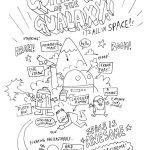
Another Star Wars piece written for Wired, and another one that didn’t run for reasons best left undiscussed. It was actually given back to me to offer elsewhere; I would have run it at the Hollywood Reporter, but I felt that it was too similar to an Indiana Jones piece I’d written for them a month or so earlier (especially with the Indy mentions).
As the adage goes, those who forget history are doomed to repeat it. The same, it seems, is true for those who forget Indiana Jones and the Kingdom of the Crystal Skull, with reports claiming that J.J. Abrams’ first Star Wars movie will focus on the cast of the original trilogy in order to give fans “one more chance to enjoy them.”
There is only one sensible response to this idea: Please, no.
On paper, it’s something that makes a strange kind of sense: Using Han Solo, Luke Skywalker and Leia Organa in Star Wars: Episode VII gives the new movie some legitimacy, while also shamelessly zeroing in on whatever affection existing fans of the original movies have left in their hearts after the prequel trilogy.
There’s an argument to be made in favor on a purely story level, as well, with the familiar faces acting as an “in” for the audience to whatever the new status quo of the Star Wars universe is. Simply by showing us how they react to the new world, we as an audience will know whether we’re in favor or not, because we already identify so much with them. On that level alone, it’s a shorthand that has to be very tempting to producers — but that still doesn’t make it an idea that’s good enough to make it all the way through to the final movie.
One reason to ignore the appeal of the idea is to look at the bigger picture of what such a move would do to Star Wars as a franchise. Episode VII is already the most high profile Star Wars project since 1999’s Episode I: The Phantom Menace, and for many people will act as a reintroduction — or, perhaps, an introduction for the first time, depending on age — to Star Wars as a contemporary movie series.
Centering that movie around characters from a series of movies that ended more than three decades earlier seems contrarian to the point of insanity, in that case: a statement that the franchise isn’t forward looking or brand new at all, but an exercise in nostalgia that’s targeted at pre-existing fans who’ve seen all of the movies to date. Despite the title, Episode VII should be treated like a new beginning, not “the next installment of something you really should’ve jumped onto earlier” (For those thinking that J.J. Abrams is too good a filmmaker to make this mistake, I present Star Trek Into Darkness as the perfect example of a movie which was tripped up by nostalgia at entirely the wrong time).
Worst still, there’s the fact that fans don’t want to accept: as a contemporary action movie — which Star Wars really has to be in order to jumpstart the franchise the way that Disney inevitably wants it to — Mark Hamill, Carrie Fisher and Harrison Ford are, at 62, 57 and 71 years of age respectively — too old to take the lead roles. As much as we may wish otherwise, for fear of our own age and growing mortality, there’s a limit to what audiences are likely to accept from their action heroes in terms of age, and the lead trinity from the original movies are at least a decade beyond that limit these days.
The mention of Indiana Jones and the Kingdom of the Crystal Skull above was intentional; remember the last time Ford returned to a fan-favorite franchise and moviemakers tried to adapt for his age by giving much of the stunt-heavy action to his newly-introduced son? Instead of making us excited for Shia LaBeouf’s Mutt, it simply made Indy seem old and somewhat lesser, in some strange, indefinable manner. Imagine that happening again, but for the three leads of the original trilogy, and ask yourself, why would anyone want to do that again?
When the possibility of Episode VII was first rumored, there was much talk about having Ford, Fisher and Hamill appear in cameos in the film, passing the torch to whatever characters the new series would eventually center on. If, as reported, that idea has been shelved in favor of more focus on the original characters, I hope it’s a decision that gets reversed sooner rather than later. It’s not that the Luke, Leia and Han should be missing from the new movie — there really is a lot of benefit to their making an appearance, albeit a brief one — but they shouldn’t dominate it. For Star Wars to survive, it needs to be about a new hope, and not stories that happened a long, long time ago.