In 2006, the breakout comic series, “Civil War” created a schism in the Marvel Universe pitting two of its greatest heroes, Iron Man and Captain America, against each other at the crossroads of identity, security and what it means to be a hero. Iron Man would ultimately prevail, but left in the dust of this great battle would be bigger questions of civil liberties, freedom and the responsibilities that go along with great power.

John Cerilli, VP, Content & Programming Digital Media tells Marvel, “When we started making this first Tales to Astonish, we were focused on telling a great story about the underlying themes regarding privacy in Marvel’s Civil War – the brilliant Marvel comic series that was published in 2006. In the middle of making this film, the NSA scandal broke and suddenly we realized just how prophetic Civil War was…and still is!”

Marvel’s love affair with Civil War continues to confound me, I admit.

(From the PR email about the company’s new documentary about the comic.)
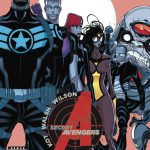
It was a series of conversations once Jason started breaking down the story, starting with the kinds of characters that he wanted. He wanted to build an eclectic group that would represent every corner of the Marvel Universe, and that would allow him to do unexpected pairings that would be fun to see. So we bounced names back and forth – I’m guessing 60 to 80 percent of that final list were guys that Jason suggested, and the other 20 to 40 percent were names that Axel and I threw off. Not in, “You must use the Ant-Man,” but, “How about Ant-Man, he’s cool, because he can do this, and that would factor in this way.” “What about Emma Frost?” “How about the Black Panther?”

Tom Brevoort, talking about how the core characters for Marvel’s next event book were chosen. Personally, I’m entirely convinced that it was “How about Ant-Man, he’s cool,” and not “How about Ant-Man, he’s in a movie in 2015 and we should really try to build up the character in the comics before we launch a spin-off to cash in.”

I’ve said before that X-Men just doesn’t feel like Lee and Kirby have their hearts in it, but I don’t think that’s quite right. I think the problem is that it was really their first attempt at building on what they’d already done. It’s a refinement rather than an innovation, pieced together from bits and pieces that worked in their other hits. The problem is that those other hits were themselves still being refined as an ongoing process, and they were way more interesting, which made X-Men redundant.

It had the hook of ostracized and isolated teens, but that was done way better in Spider-Man, the book that laid the foundation of the modern superhero. The team bickered while showing off their super-powers and had Angel and Cyclops competing for Marvel Girl’s affections, but that was nowhere near as good as the strained family relationship in Fantastic Four. They were outsiders in a world that didn’t understand if they were heroes or villains, but, you know, that’s the Hulk’s entire deal. X-Men was the first comic that tried to mash all that up — it’s the first real product of the Marvel Age — but it didn’t do anything better.

Chris Sims wrestles with why the first incarnation of the X-Men didn’t catch fire with the readers, especially in light of the runaway success of the second incarnation. I’m not sure I agree with a lot of what he says, in large part influenced by my Avengers re-read for Wait, What? and noticing many of the same problems in the Lee/Kirby issues of that series (For me, what likely doomed X-Men’s first run was the blandness of the Drake/Roth run that followed, as much as I have affection for it). But it’s good stuff, nonetheless.

One of these days, I’ll sort out my feelings about post-Claremont X-Men and how overbalanced it felt towards the high concept, and write that essay, I swear.

Imagine a present day in which old comic books and superheroes are of interest only to a coterie of geeky, aging fanatics. Where the names Tom Mix and Captain America are equally remote (just like 97% of everything Martin Goodman ever published). Those of us who are among the geeky fanatics might regard him as the man who made many artists’ visions possible – the non-artistic enabler of the forgotten art and mythology of comic books. If he’d ended up as a middle-class retiree in Florida, coming out to comic book conventions to swap stories with Jack Kirby, we might think of Martin Goodman as a quirky, square, accidental hero. A guy who built a family business that enabled Captain America to exist, that enabled the early shop work of Bill Everett and Carl Burgos to get an airing through a major newsstand publisher, and who had the good sense to allow Stan Lee to do what he did in the Sixties.

Instead, we know him as the first person to refuse Marvel comic book creators a share of the accumulating value of their creations. As he always had, he regarded the properties he’d bought as his own, and then he sold all the important ones for less than the value of Ant Man. From the lofty perch of 2014 parent company Disney, Martin Goodman was as clueless as Jack Kirby.