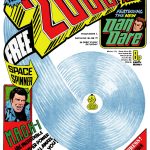
Following the overwhelming success of 2013’s “Villains Month” 3-D motion covers, DC Comics is bringing the technology back this September! Spinning out of the events of the new weekly series THE NEW 52: FUTURES END, comic books will leap 5 years into the future! This fall expect the books to have even more depth and motion than before!

DC announces its September event for the year.

In all honesty, if this isn’t accompanied with a “Hey, we seriously fucked this up last year and we’ve learned from our lesson and here’s proof – for one thing, we’re going to overprint the whole thing so that retailers aren’t screwed again” type mea culpa from DC, they’re doing it wrong.

Related: As much as I like the idea of Futures End in concept (I suspect the execution will be too dystopian for my liking, but we’ll see), and as much as I like the idea of jumping all of the regular comics forward for a month to give glimpses of what’s going to come even though it probably won’t – hey, I bought all of the Armageddon 2001 annuals way back when, and it’s exactly the same gimmick – and as much as I like the idea of weekly comics in general… Adding all of these together sounds like a Countdown to Final Crisis-esque disaster waiting to happen to me.

Podcasting has been a growth area for Slate, and the site’s collection of shows now grab around 2 million downloads a month, according to Andy Bowers, Slate’s executive producer of podcasts. By going daily, the site wants to grow that audience further and continue to capitalize on a growing source of advertising for Slate.

“Slate loves podcasts,” Bowers said. “They do really well for us, and everyone wants to be involved. We want to figure out how to smartly grow without overextending ourselves, but we’re going to keep growing.”

Begin the Begin

For no real reason whatsoever, here’s a pitch document that I sent to Time at the start of the month (Minus the pitch that was approved). This is the kind of format I work in for them, although it tends to evolve (I don’t always do pros and cons, for example).

– With Back to the Future being revived as a musical in London by the same producers as the Ghost revival/musical, a list suggesting other 1980s movies that are ready for musical revival (Short Circuit! Big! Cocoon!) with accompanying plot pitches and suggestions for song titles, show-stopping scenes/numbers, etc.
Pros: Fast piece, potential for nostalgic appeal.
Cons: Even if it ran on Tues (assuming approved today, written Mon), would that be too late for halo effect of announcement? Also, too niche?

– Op-ed about Sherlock’s season finale and fan-service in the new mainstream. For want of not spoiling the finale of the new Sherlock season (airing Sunday), there’s a lot of… pandering, perhaps, to those who have been paying very close attention to the season as a whole. This isn’t a new thing for Steven Moffat; his Doctor Who is built around the same model, with plots that require a lot of either close focus throughout or accepting that some things will have to be taken on trust in the finale. I’m stuck wondering whether this is the next generation of what could be called the Lost model of serialized TV: something that rewards obsessives, arguably alienates fans and builds brand loyalty through that very divide — creating a them and us mentality.
Pros: I don’t think people have really addressed this a lot, despite all the Sherlock attention?
Cons: Will people care about Sherlock post-end of S3?

– Related: Why aren’t people attacking Downton Abbey for being misogynistic this season? Are they, and I just haven’t seen it? The way the show writes its female characters is insane — Mary needs men to tell her to get past her grief, Anna gets raped and blames herself, etc. Consider this a stealth pitch, I guess.

[Approved Pitch Removed — but now you see how far down the list it was.]

– Tying in with LEGO movie (2/7), something about LEGO’s return to cultural currency? I feel like that’s happened through selling out, for want of a better way to put it — licensing outside properties and being adapted into video games and animation. LEGO isn’t really about, well, building blocks anymore — it’s a brand based on a visual aesthetic, the appeal of which is at least partially nostalgic. Is that sustainable?
Pros: Topical, something that I’m not sure is being talked about out there — again, unless I’m missing it — excuse to give overview of where LEGO is at right now as a brand/company
Cons: Too dry, perhaps? Do people care about LEGO as a company, especially when they could just watch Chris Pratt as a CGI blockhead?

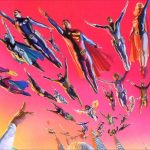
I’ve mostly settled on a definition for my Starlin book, but I’m still curious what others think: how would you define “cosmic comics?”

Oh, man.

Putting aside the temptation to snark and say “comics for stoners” – although, you know, there’s truth in that – I’d probably have to plump for some overly complicated definition. They’re comics that not only try to ask the big questions, but answer them, too – and, in doing so, bind those big questions to personal, mundane concerns that accentuate and contradict their scope, for want of a better way to put it.

A good cosmic comic for me is something that’s ambitious and, usually, unsuccessful in large part because it ends up being so personal that you either “get it” or you don’t. There’s no middle ground.

Cosmic doesn’t mean setting for me; like, Ron Marz’s Silver Surfer comics aren’t cosmic, they’re superheroes in outer space because he’s not trying to reach some Big Point About Existence As He Understands It. Same with Bendis’ Guardians of the Galaxy. But Englehart’s Millennium…? That’s amazingly cosmic, because he’s trying to say something about the meaning of life, as utterly bound to the 1980s as he lived them as it ends up being.

Hmm. I need to come back to this, I think. I’m very curious to know your definition – will I have to wait for the Starlin book to find out?

(I’m also very, very excited to read the Starlin book; he’s a creator I’ve tried a lot but never managed to love; that you do love his work so makes your book amazingly appealing to me.)

What is your go-to will watch endless times movie?

First thoughts: Scott Pilgrim vs. The World, which has the music, color and swagger to win me over, or HEAD, which I maintain is the greatest movie made about the 1960s ever.

On reflection, it’s probably either Charade or The Thin Man, both of which are practically perfect in my eyes.