Being an internet refuge for Graeme McMillan

I wholeheartedly apologize to those that find this completely annoying…
what happened was was that I had a pretty fantastic entrance for Capt. Marvel but took it out because I kind of like the hopelessness of the issue. I like that many of you have no idea how the guardians are going to get out of all of this.
I promise you she is in next issue and many issues to come and narrates the Guardian’s annual.
there is a fine century long tradition of things being on the cover that aren’t in the book and I gladly hold that tradition 🙂
Brian Michael Bendis explains why a comic that doesn’t feature Captain Marvel at all nonetheless ended up with this cover:
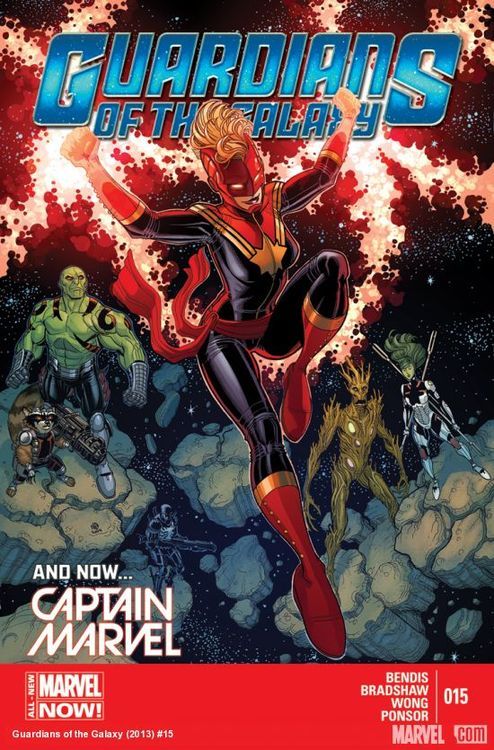
I love that they didn’t just swap the cover out for something different. Nope. Just committed and followed through. That’s… something.
Electricomics will be a 32-page showcase with four very different original titles:
Big Nemo – set in the 1930s, Alan Moore revisits Winsor McCay’s most popular hero
Cabaret Amygdala – modernist horror from writer Peter Hogan (Terra Obscura)
Red Horse – on the anniversary of the beginning of World War One, Garth Ennis (Preacher, The Boys) and Danish artist Peter Snejbjerg (World War X) take us back to the trenches
Sway – a slick new time travel science fiction story from Leah Moore and John Reppion (Sherlock Holmes – The Liverpool Demon, 2000 AD)
Two quick thoughts on this PR about the launch of the new digital comics app/imprint Electricomics:
(via graemem)
Re #2, I think at this stage it’s just What He Does – Moore is an artist who is fascinated by lots of different aspects of the relationship between creativity and culture, and using existing cultural properties as icons or totems or IDK jokes is a good way to explore that. I’ve noticed people on Twitter jumping on this, but it seems no more odd or negative a tendency – not that you’re saying it’s negative – than Garth Ennis writing yet another war comic, which I see we’re also invited to get excited about.
It’s interesting that he does this, of course, and I remember that Amazing Heroes (?) list of What Alan Moore Is Reading from 1988 or so which was basically all original-IP indies – Love And Rockets, Puma Blues, Cerebus, Beanworld… I think Zot! and American Splendor too, EXACTLY the reading list any diligent Comics Journal reader who was sick of superheroes would have put together. (Also, perhaps importantly, almost all ‘writer-artists’ to use the ungainly term of the era). And a bit after that he starts Big Numbers and From Hell, which are very much the Alan Moore projects you might predict someone with those tastes would have.
That feels like a real pivot point – I wonder the extent to which the failure of Big Numbers (and the difficulties in getting From Hell done) affected his creative direction. After that, as everyone points out, he tended to prefer working with existing ideas, characters, etc.
(People often go – ah but he attacks other people for doing that and then he does it himself, the big hairy hypocrite – but for all that I find Moore in interviews infuriating about a lot of things, and for all that I’m not actually that in love with or engaged with his creative approach since about Promethea… I think what angers him – aside from a certain amount of guilt – isn’t the fact of the revivalism but the way the revivalism is so crude and one-dimensional and circular and unadventurous and as the icing on the cake centred so obsessively on the properties of companies that have fucked him and others over. “Using old bits of popular culture” is a really really REALLY broad umbrella.)
(via tomewing)
Oh, I think Big Numbers is crazily important in the grand scheme of Moore’s originality as a comic book creator – I think the failure of that project really impacted his idea of what comic readers “want” as a whole, and also what the medium can and can’t support in terms of subject matter. I think the way in which Big Numbers fell apart cemented his opinion of mainstream comic book culture as something intellectually retarded and unwilling to engage in anything other than nostalgic reworkings no matter how ambitious they may be in scope or executions.
It’s odd to wonder what Moore would be like had Big Numbers made it to completion. What comics would be like, in fact.
Electricomics will be a 32-page showcase with four very different original titles:
Big Nemo – set in the 1930s, Alan Moore revisits Winsor McCay’s most popular hero
Cabaret Amygdala – modernist horror from writer Peter Hogan (Terra Obscura)
Red Horse – on the anniversary of the beginning of World War One, Garth Ennis (Preacher, The Boys) and Danish artist Peter Snejbjerg (World War X) take us back to the trenches
Sway – a slick new time travel science fiction story from Leah Moore and John Reppion (Sherlock Holmes – The Liverpool Demon, 2000 AD)
Two quick thoughts on this PR about the launch of the new digital comics app/imprint Electricomics:
Eric Lewald takes pride in his ass-kicking women of X-Men: The Animated Series and the number of female writers he had on the show. “We always get crap out here when we’re doing shows, ‘This is for boys. Don’t have any girl characters,’” he says. “Margaret was probably the main reason. It was her show. Storm and Rogue’s toys didn’t sell as well. [Usually] they would tell you no matter how good Storm is in the episode, the toys will sell half as many as the male characters. But it was a time when there were no toys selling well for Marvel. We didn’t have the pressure from the toy companies.”
I wonder how this connects with the oft-cited “They didn’t make enough toys of the female characters” trope? Did the X-Men toys sell half-as-well because there were less produced overall, or was there genuinely less demand for Storm and Rogue compared with Wolverine and Cyclops in terms of toys?
Obviously we all know that the currency of issue #1s has been devalued of late, and we also all know that when there are so many X-Men titles, most of them are going to be throwaway. Even so, it comes as a surprise to see such a blatant filler issue so early in the run of a new title.
An odd feature of the X-Men line right now is that while the two lead titles are plainly the Bendis books, neither of them actually features the X-Men. By which I mean, they both feature teams that, until a few years ago, would have been given a different name and presented as spin-off titles. The X-Men, by any sensible definition, are the team living in the Jean Grey School. Uncanny is about Scott rebuilding a new group after the collapse of his side of the schism during Avengers vs X-Men; All-New X-Men is specifically about the time-travelling teen group, making it akin to the early nineties Legionnaires spin-off from Legion of Super-Heroes.
That ought to leave the way clear for somebody else to write the actual X-Men and have some leeway to make their book feel significant. But none of the other three titles do feel significant right now, in pretty much any way, and hitting a comedy fill-in issue about a goat seven issues in really brings that home.